Resident Evil 4 in VR: Go-To-Market
BRINGING A CULTURAL INSTITUTION TO AN ENTIRELY NEW MEDIUM
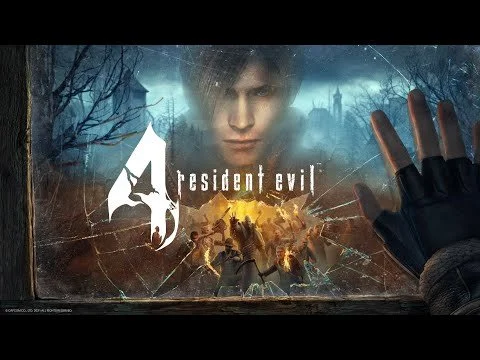
Resident Evil 4 is not a game. It is a cultural institution.
First released in 2005, RE4 is widely regarded as one of the greatest games ever made, a title that redefined the third-person shooter genre and built one of gaming's most devoted fanbases over two decades. When Meta Quest committed to bringing RE4 to Meta Quest 2 as a full six-degrees-of-freedom VR experience, the stakes were immediate and unforgiving: Resident Evil fans are passionate, skeptical of ports, and quick to punish anything that feels like a cash-grab on a franchise they love.
At the same time, Meta Quest had a platform-level problem to solve. VR as a category needed repeated proof points to continue to push the product promise of VR Gaming, and RE4 was a single title that could answer, at commercial scale, the question every skeptical consumer and analyst was asking: is there a game worth buying a headset for? Resident Evil 4 was our answer. But getting there required building a new kind of GTM machine, negotiating a partnership with one of Japan's most protective IP-holders, and developing a campaign strategy that could do two difficult things simultaneously: honor a legendary franchise, and make the case that horror in six-degrees-of-freedom VR is something categorically new.
There was no playbook for this, so I wrote one.
WE HAD TO DO TWO THINGS AT ONCE – A TWO-PRONGED STRATEGY
Goal #1: Attract new users: Leverage RE4 as a reason to buy Meta Quest.
Goal #2: Re-engage existing users: Use RE4 as a reason for users to come back and re-engage with the platform.
The RE4 launch had to speak to audiences with fundamentally different relationships to both the game and the platform. Because we were solving two distinct problems, device sales and platform re-engagement, a single audience lens was not enough. I mapped different target segments for each strategy, and used this to craft unique GTM strategies for each goal.
THE CAMPAIGN PLATFORM: FEAR, REIMAGINED
The central creative and strategic insight behind the RE4 campaign was this: horror in VR is not a horror game you watch. It is a horror experience you survive.
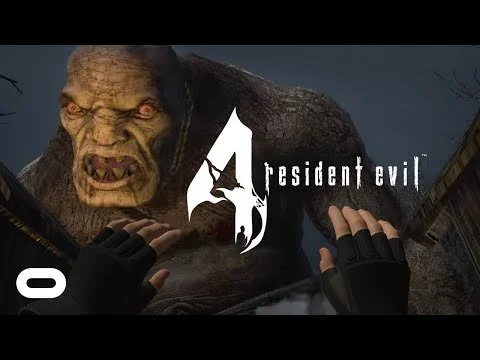
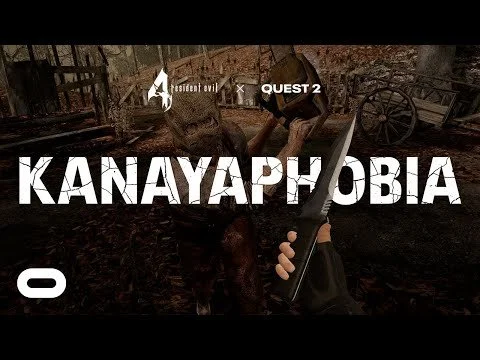
On a flat screen, you watch Leon Kennedy fight his way through a Spanish village overrun by Las Plagas. In six-degrees-of-freedom VR, you are Leon Kennedy. The biological response is categorically different, and that difference was the campaign. I built the campaign platform around a single concept: phobia as proof of medium.
So we leaned into the specific fears that RE4 activates and made the argument that VR was the only medium capable of activating them fully. The campaign identified the distinct phobic responses the game reliably produces, claustrophobia, agoraphobia, fear of pursuit, fear of the unknown, and positioned each as evidence for why playing this game in VR was not just a better experience, but a fundamentally different one.
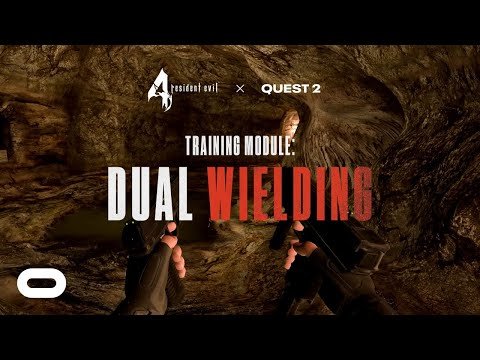
Alongside the phobia pillar, we developed a parallel consumer education track around motion comfort. VR horror presented a real barrier for potential players: the concern that immersive movement in a horror game would cause motion sickness. We addressed this head-on. Rather than minimize the concern, we educated users about the settings they have control over that can minimize discomfort. RE4 VR offered multiple locomotion modes, smooth locomotion, teleportation, snap turning, and comfort vignettes, and the campaign was deliberate about communicating these options clearly. Players were empowered to calibrate the experience to their own comfort level. The message was: you control the intensity.
That framing did two things. It removed one of the most common objections to VR adoption. And it signaled that Meta Quest took player experience seriously, that the platform was designed around players, not just hardware specs. What started as a defensive message became a trust-building one.
BUILDING THE MACHINE: A NEW MODEL FOR SYSTEM-SELLER CAMPAIGNS
RE4 required infrastructure that did not exist yet. The Meta Quest content marketing org had never run a campaign at this scale for a single title. Building it meant creating new processes, securing new resources, and bringing in new partners, across two continents, in two languages, with an IP-holder who had never worked with us before.
I established a new integrated working unit, IMM, ICS, PML, and PMM operating as a single core team, that interfaced with Social and Influencer, Owned and Operated, and Channel Marketing to ensure consistent messaging across all surfaces. This was the first time these functions had been organized around a single content title rather than operating in parallel lanes. The model required building trust, shared vocabulary, and a clear RACI across groups that had previously worked independently.
Alongside the US team, I partnered closely with a dedicated MarCom team in Japan, with coordination extended to secondary markets across EMEA. This was Meta Quest’s first bespoke international launch campaign for a content title, and managing it required maintaining alignment across time zones, language barriers, and radically different market contexts, all simultaneously.
The Channel Strategy
With internal and external resources aligned, I negotiated the channel mix directly with internal channel partners. The strategy leaned heavily on two big bets:
1. Owned social storytelling: rather than relying on a single launch trailer, we built a content cadence that lived on Meta Quest's social platforms in the weeks leading up to launch. This gave us space to develop the phobia narrative over time, introduce the motion comfort story, and build anticipation in a community that was already paying attention.
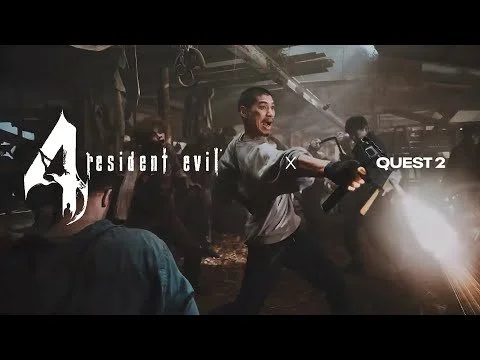
2. Influencer amplification: we built a curated creator ecosystem anchored in horror gaming and VR communities. They were given the game, context, and creative latitude to produce authentic reactions, because authentic fear is more convincing than any brand message. The brief was simple: show what it actually feels like to survive RE4 in VR.
3. A dedicated retail bundle: We knew that we needed to represent this title at point of sale for the Meta Quest device, and offer some kind of price savings offer to maximize our leverage for lifting device sales. We pitched the offer internally, secured approval from CAPCOM, and coordinated ESRB and PEGI approvals to make this all come together. The bundle eventually drove a massive sales lift for Quest 2 devices in the US, making it one of the most commercially successful hardware and content co-marketing activations in the brand’s history.
RESULTS: RECORDS BROKEN, A PLATFORM REINVIGORATED
The numbers were immediate and unambiguous.
We broke the record for most sales ever driven in a day on Meta Quest within 4 hours after launching
RE4 was the first title launch to show incremental lift to platform device MAU, proving that we inflected platform re-engagement within the first weekend of launch
More than 4x lift in Quest 2 device sales
Won VR Game of the Year at The Game Awards
Beyond the metrics: RE4 shifted the narrative. For the first time, the gaming industry had evidence, not projections, not demos, but commercial proof, that a AAA title could perform on Meta Quest at a level that justified serious investment. What began as a campaign with no precedent ended as the template for how Meta Quest, and later Meta, would market its most important titles.
WHAT I LEARNED: PRINCIPLES THAT STILL APPLY
1. The best creative insight comes from the product itself, anchor on true differentiators. The phobia campaign pillar was not invented in a brief. It came from playing the game in VR and asking: what does this do that nothing else can? That question is the right starting point for any product marketing problem.
2. Consumer fear is a barrier until it's a feature. The motion comfort education track started as a defensive move, address the objection before it becomes a reason not to buy. It became something more: a demonstration that Meta Quest was listening to players, building for them, and committed to making VR accessible regardless of someone's propensity for motion sensitivity. Turning an obstacle into a trust-building moment is one of the most useful things marketing can do.
3. New frameworks require new infrastructure. We could not run a system-seller campaign through the existing content marketing model. It was not built for it. Rather than work around the constraints, I built a new model: new working team structure, new agency relationships, new channel negotiation approach, new measurement framework. The campaign's success was only possible because the infrastructure was designed for it first.